
Evaluating a Greater Manchester creative mental health programme through collaborative, culturally responsive and mixed-method research, generating evidence, learning and practical resources to strengthen creative health practice with Global Majority communities.
The opportunity
MYRIAD was a Greater Manchester-wide creative health programme commissioned by NHS Greater Manchester to explore how creative approaches could contribute to better mental health support for Global Majority communities.
Delivered through a cross-sector consortium, the programme sought both to diversify and strengthen the creative health workforce and to test culturally competent approaches to creative mental health support within communities. Five Test and Learn projects created opportunities for cultural, health and VCFSE organisations to experiment with new ways of working, while practitioners were supported through training, placements, supervision, peer networks and reflective practice.
Local was appointed as MYRIAD's independent Learning and Evaluation Partner, working alongside the programme for approximately 19 months.
Our challenge was not simply to determine whether MYRIAD had worked. We needed to understand what was changing, for whom, how and why – while developing an evaluation approach sensitive to different cultures, languages, lived experiences and communication needs.
What Local brought
Local designed and managed a multi-level evaluation spanning change for individuals, creative practitioners, organisations and the wider creative health system.
We began by developing the programme's logic and evaluation framework, establishing shared outcomes, lines of enquiry and evidence requirements across a complex partnership. We then worked collaboratively with partners and practitioners to design a mixed-method approach combining quantitative evidence with qualitative research, creative reflection and lived experience.
Our work included:
• developing the programme's evaluation and logic framework;
• designing and coordinating six complementary datasets across the programme;
• co-designing evaluation tools with partners, practitioners and participants;
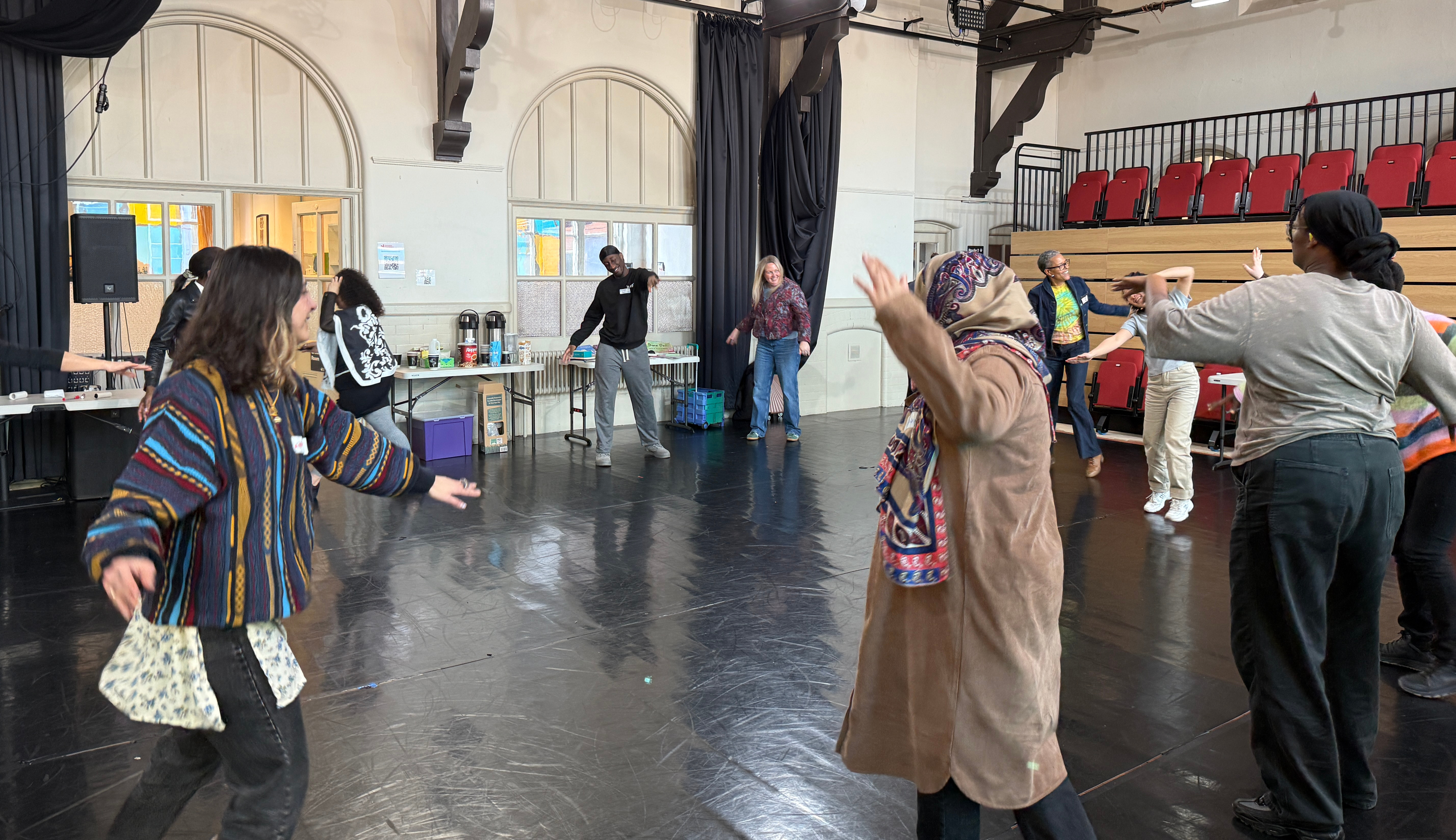
• using surveys, wellbeing measures, interviews, observation, facilitator journals, reflective conversations, film and creative methods;
• analysing and triangulating quantitative and qualitative evidence;
• adapting methods where literacy, language, accessibility or emotional safety created barriers;
• facilitating iterative learning and review throughout delivery, enabling emerging findings to influence the programme while it was still happening;
• collaborating with facilitators and practitioners to understand both participant outcomes and the conditions required for good practice;
• translating findings into an accessible final report, recommendations and learning resources; and
• sharing findings with practitioners, partners and commissioners through MYRIAD's final dissemination event.
This reflects a principle that runs through Local's research practice: the method needs to work for the people, rather than asking people to fit the method.
Evaluation therefore became part of MYRIAD's participatory practice, not something imposed on it from outside.
What changed
Across MYRIAD, the evaluation captured evidence from a substantial and diverse programme involving 111 community participants, 45 practitioners, 10 partner organisations and more than 150 workshops, training and reflective sessions. The evidence base included more than 200 participant feedback entries and 40 facilitator reflections, alongside interviews, observations and programme data.
The findings demonstrated change at several levels. Among community participants, 81% reported improved mood or reduced stress, 78% increased confidence and self-expression, and 74% greater social connection. Among practitioners, 91% reported increased professional confidence, 89% improved knowledge of trauma-informed and culturally competent practice, and 94% felt more supported as part of a practitioner community.
But the numbers only told part of the story.
Our qualitative research helped explore how culturally safe spaces, trusted relationships, creativity, lived experience, practitioner support and community-based delivery contributed to those outcomes – as well as identifying barriers and areas requiring further development.
“I didn't have to explain myself – I could just be.”
The evaluation was deliberately iterative. Where conventional evaluation tools were inappropriate or created barriers, methods were adapted through visual, creative, observational and facilitated approaches. This helped ensure the need to gather evidence did not come at the expense of trust, accessibility or participants' wellbeing.
Why it matters
MYRIAD has significantly deepened Local's knowledge of the space where creativity, mental health, cultural competency, health inequalities and community practice intersect.
We don't describe ourselves as creative health specialists. Instead, we bring expertise in participatory research, evaluation, co-design and creative practice, alongside growing knowledge developed through working closely with people who bring clinical, cultural, community and lived-experience expertise.
MYRIAD demonstrated why that combination matters.
Evaluating creative health requires more than measuring attendance or asking whether people enjoyed an activity. It means understanding different forms of change, recognising people's experiences in context and exploring the conditions that allow creative approaches to contribute meaningfully to wellbeing.
The commission also strengthened our relationships across Greater Manchester's creative health ecosystem and our understanding of collaboration between culture, health, VCFSE organisations, practitioners and communities.
Most importantly, it reinforced our belief that good evaluation isn't something done to people at the end of a project. It is developed with people, embedded within delivery and used to make the work stronger while it is still happening.
Creating a legacy for learning
“People came for the art but stayed for the belonging – that's where the real healing happened.”
The work did not end with the final evaluation report.
Evidence and learning from MYRIAD contributed to a wider body of practical resources designed to support practitioners, community and faith organisations, volunteers and mental health providers to develop more inclusive and culturally competent creative health practice.
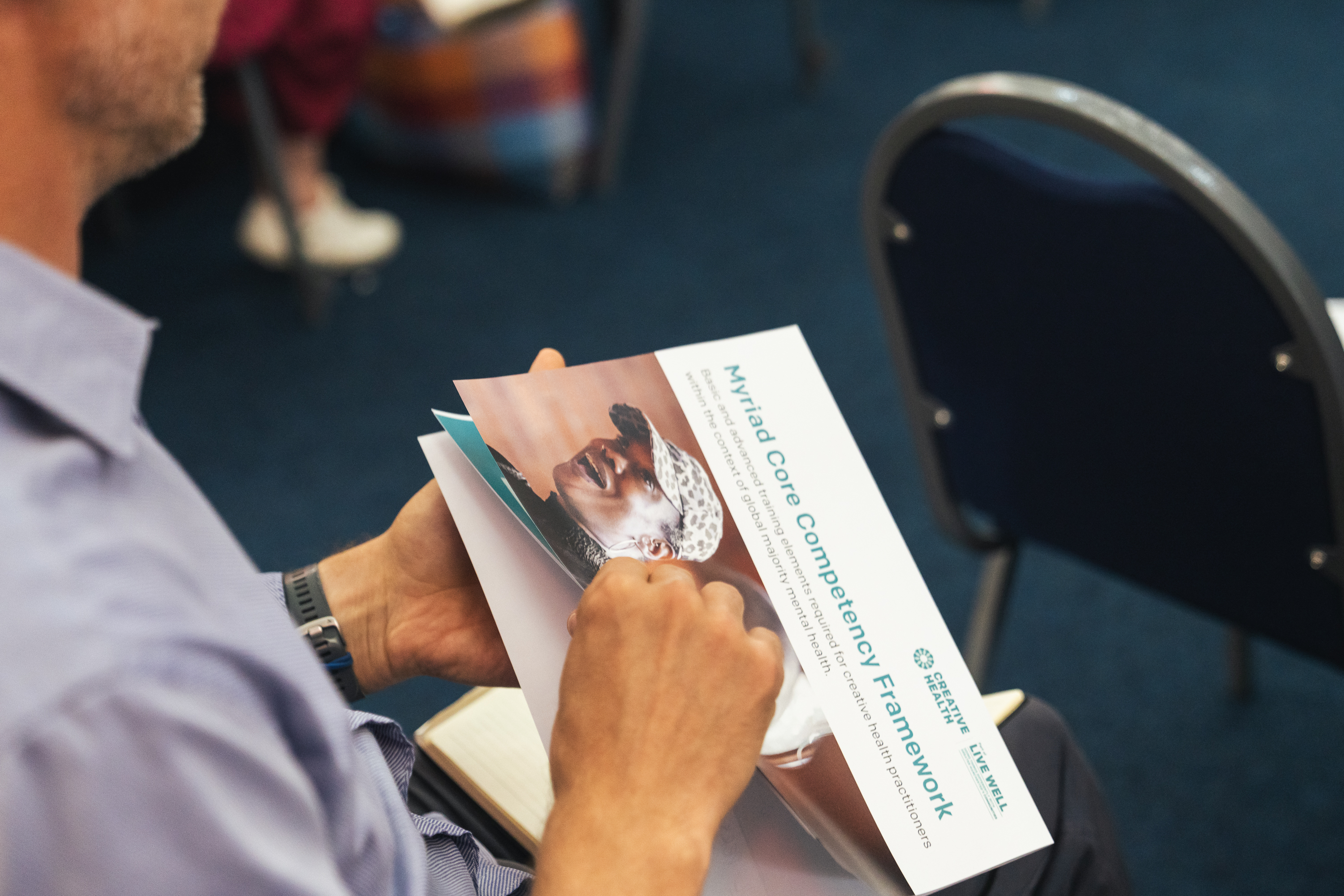
The resulting MYRIAD online resource brings together the evaluation report, case studies, practitioner resources and a Core Competencies Framework, making the learning freely available to others working across creative health.
Explore the MYRIAD project and resources
“When I feel supported, I can support others better.”
Project highlights
• 19-month learning & evaluation partnership
• 111 community participants
• 45 practitioners supported
• 10 partner organisations
• 150+ workshops, training & reflective sessions
• 200+ participant feedback entries
• Cross-Greater Manchester partnerships
• Global Majority focus
• Six complementary evaluation datasets
• Mixed-method & creative evaluation
• Participatory and culturally responsive research
• Final report, resources & dissemination
Hero Image: MYRIAD Dissemination event. Credit: Richard Tymon


