
Working with Salford’s communities, artists and creative partners to turn evaluation into cultural production – capturing the stories and impact of community-led arts, culture and heritage through photography, audio, food, design and storytelling.
The opportunity
In 2024, Salford CVS, working with Salford City Council and the Salford Culture and Place Partnership, commissioned Local to creatively evaluate Whose Art, Whose Culture? – a UK Shared Prosperity Fund programme supporting community-led arts, culture and heritage activity across Salford.
The programme set out to challenge traditional definitions of art and culture and ask a deceptively simple question: whose art, whose culture? Funded projects represented communities of both geography and identity, including people experiencing racial inequalities, d/Deaf and Disabled people, LGBTQIA+ communities, younger and older people and communities experiencing poverty.
The brief deliberately asked for something different from conventional evaluation. Salford CVS was already collecting quantitative monitoring data; Local’s role was to uncover the people, experiences and stories behind those numbers and find creative ways of sharing them.
Crucially, the final evaluation needed to have value beyond reporting to a funder. The ambition was to create something that could become part of Salford’s cultural landscape in its own right.
What Local brought
We approached the commission as both an evaluation and a creative project.
Rather than deciding the final outputs before meeting the people involved, we spent time understanding the programme, visiting activity and working with community organisations to identify methods appropriate to different participants and settings.
Our original methodology committed to being creative, design-led, accessible and inclusive, working with local artists and collaborators who brought their own knowledge of Salford and its communities.
Across the project, Local:
• worked with community organisations to capture qualitative outcomes, experiences and stories;
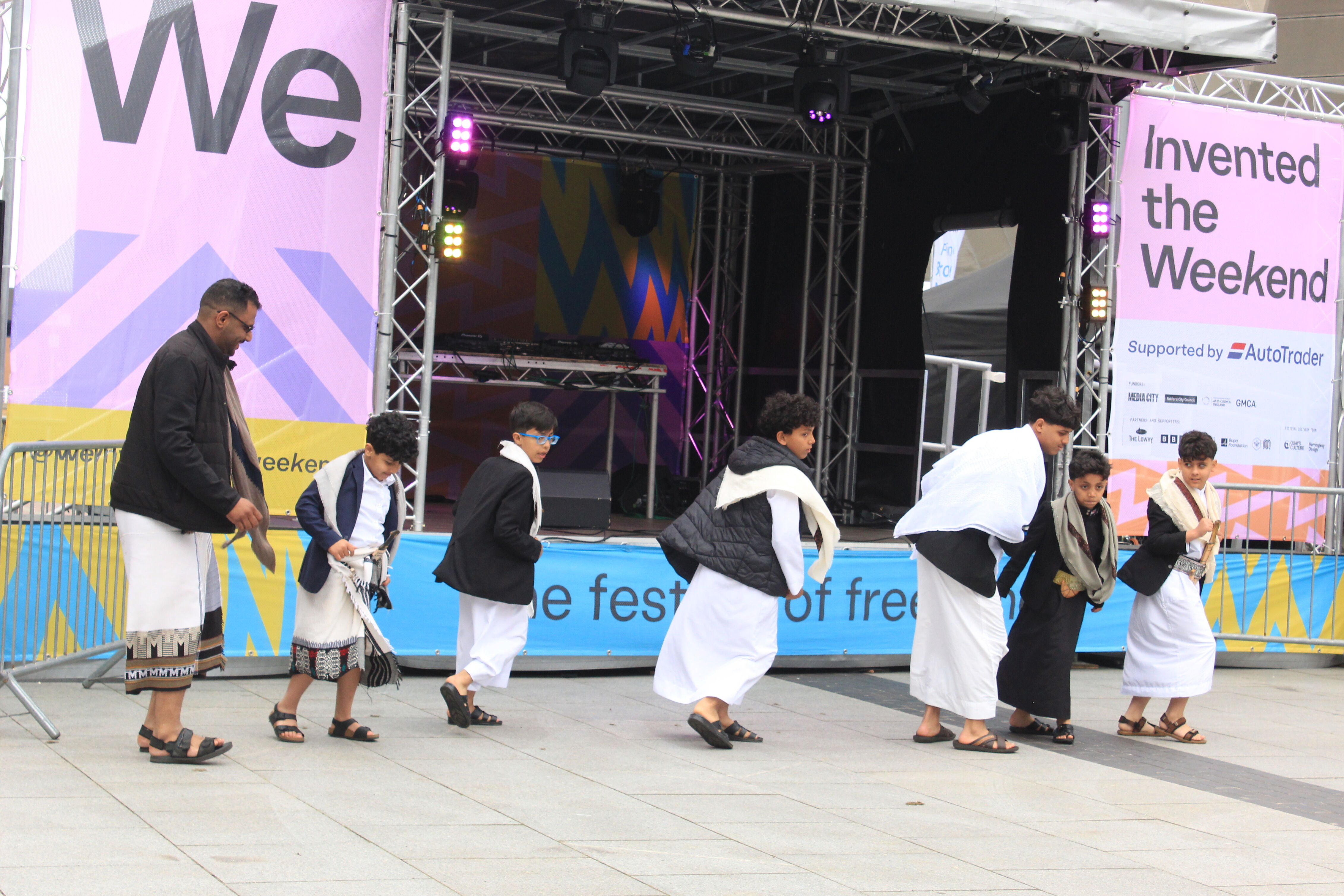
• visited projects and activities across Salford, meeting communities in the places where activity was already happening;
• commissioned and collaborated with local artists and creative partners to interpret stories through different media;
• partnered with the University of Salford’s Photography department, involving students in documenting the programme;
• worked with Salford City Radio to bring community voices into the evaluation;
• commissioned artist Vicky Clarke to develop audio stories;
• developed a distinctive visual identity connecting the different projects and outputs;
• curated photography, stories, recipes, audio and design into a collective portrait of creativity across Salford; and
• developed a dissemination approach that took the evaluation back into communities as well as to strategic partners.
Consent, safeguarding, representation and accessibility were integral to the process. The original brief recognised that photography, film and documentation would not be appropriate for everybody, so our methods needed to respond to different cultures, communities and individual preferences rather than applying one evaluation tool to everyone.
What we created
The result wasn't a single evaluation report.
Instead, the evidence became a collection of creative artefacts, each offering a different way into the stories of Whose Art, Whose Culture?
Photography Zine
A visual record bringing together all 22 participating projects and capturing people, activity and places across Salford.
Recipe Cards
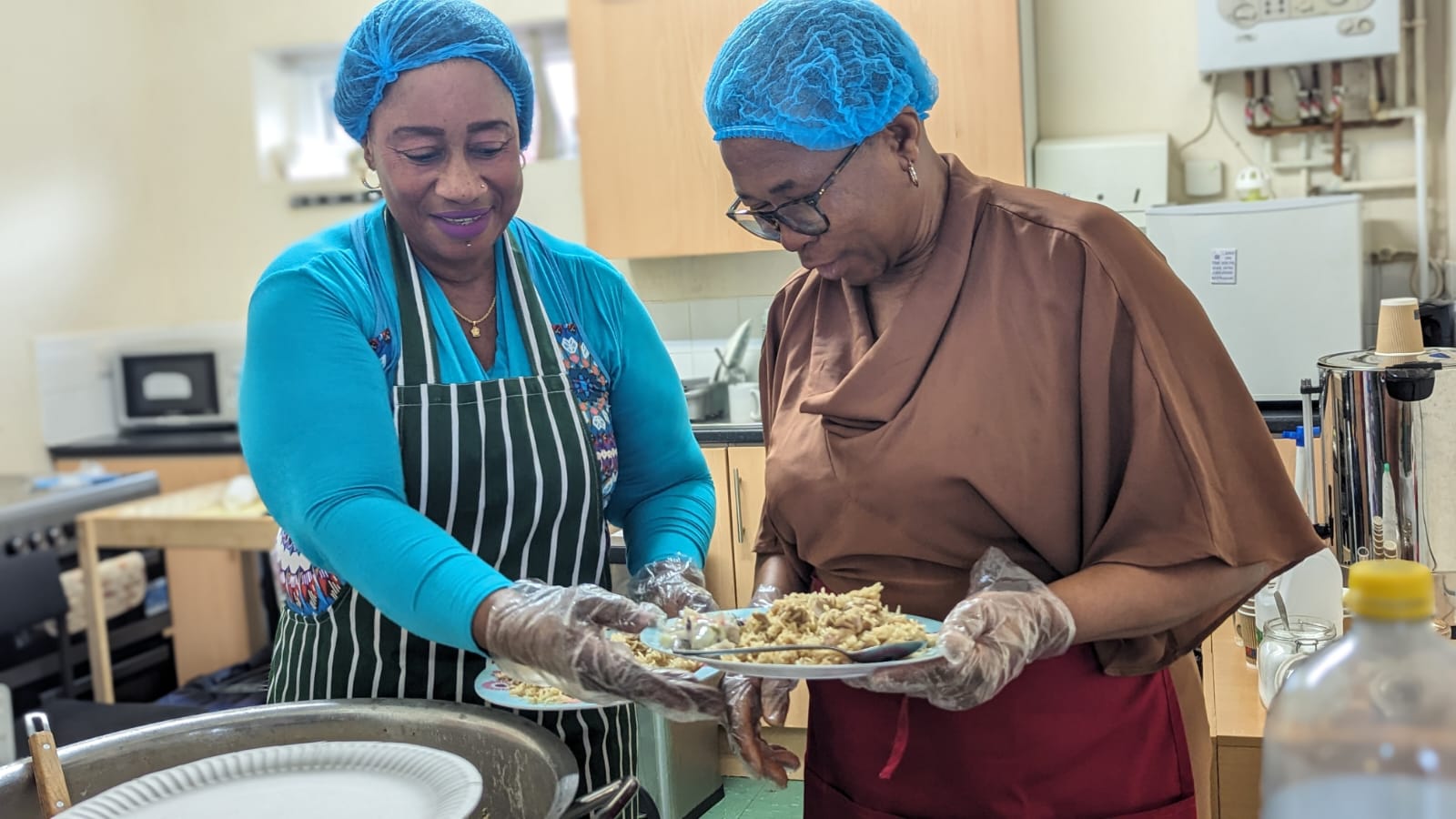
Recipes and accompanying stories exploring the role food plays in culture, memory, connection and care.
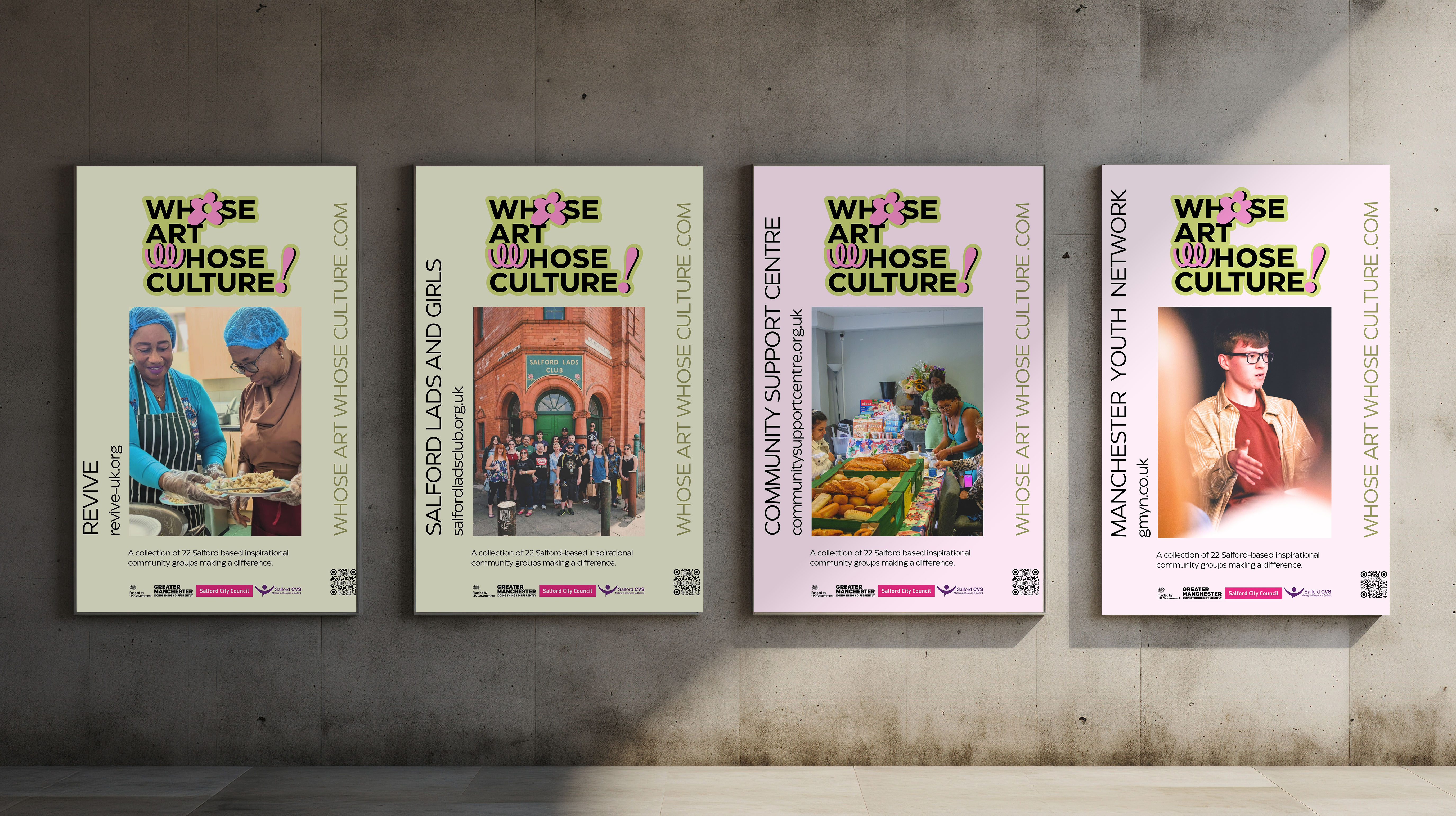
Poster Series
Individual designs celebrating participating organisations while connecting them through a shared Whose Art, Whose Culture? identity.
Audio Stories
Commissioned with artist Vicky Clarke and shared through Salford City Radio, enabling participants and organisations to tell their stories in their own voices.
Together, these created something closer to a cultural archive than a conventional evaluation: a collection of stories, images, voices and objects that could be shared, displayed, heard and revisited.
What changed
The evaluation made visible the extraordinary breadth of culture already happening within Salford’s communities.
Rather than defining culture through institutions or artforms, Whose Art, Whose Culture? revealed culture through people’s everyday lives – through food, faith, heritage, music, photography, making, gathering, volunteering, storytelling and shared experience.
The process also enabled the individual projects to become part of a collective story. Twenty-two very different community-led projects could retain their own identities while contributing to a richer picture of Salford’s cultural diversity.
Dissemination was therefore designed as part of the evaluation itself. Outputs were created to travel through community spaces, digital platforms and local media, while findings and learning were also shared with strategic partners through the Salford Culture and Place Partnership.
Why it matters
Whose Art, Whose Culture? helped us test an idea that has become increasingly important to Local:
What if evaluation could give something back?
Too often, communities give their time, experiences and stories to research and receive very little in return. The knowledge travels upwards into a report, while the people who created it rarely see themselves reflected in the final product.
Creative evaluation gives us an opportunity to do things differently.
It can still capture evidence and understand impact, but it can also create something meaningful: an archive, artwork, story, conversation or resource that belongs within the cultural life of a place.
That doesn't mean choosing creativity over rigour. It means designing evaluation around the people and purpose of the project, gathering evidence ethically and carefully while thinking much harder about who the evaluation is for, how people can participate, and what should be left behind.
Whose Art, Whose Culture? demonstrated that evaluation itself can become an act of cultural production – amplifying community voices, celebrating local creativity and leaving behind a record of who participated, what mattered and what happened.

Project highlights
• 22 community-led projects captured
• City-wide creative evaluation
• Community and VCSE partnerships
• University of Salford collaboration
• Salford City Radio partnership
• Local artists and creative practitioners commissioned
• Photography zine
• Community recipe collection
• 22-project poster series
• Audio stories and broadcasts
• Creative dissemination and advocacy
Explore the project
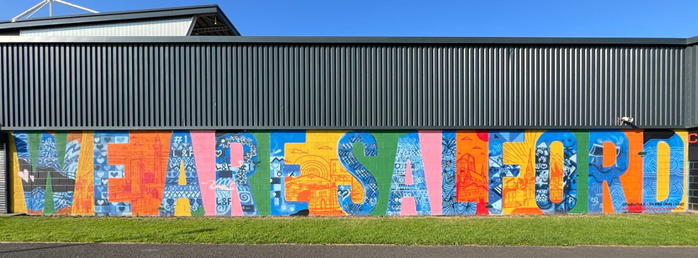
Hero Image: Salford Loaves + Fishes. Artist Oska With A K


